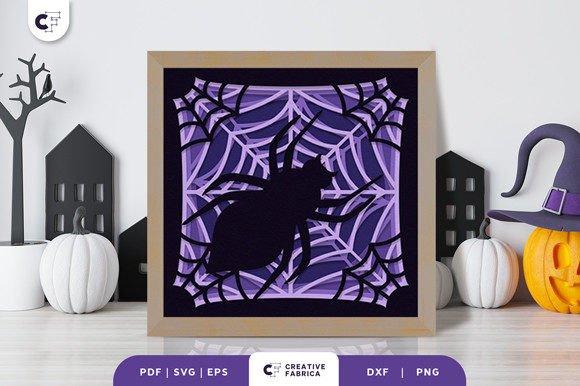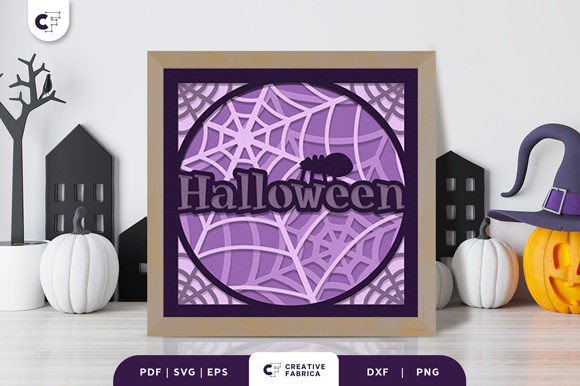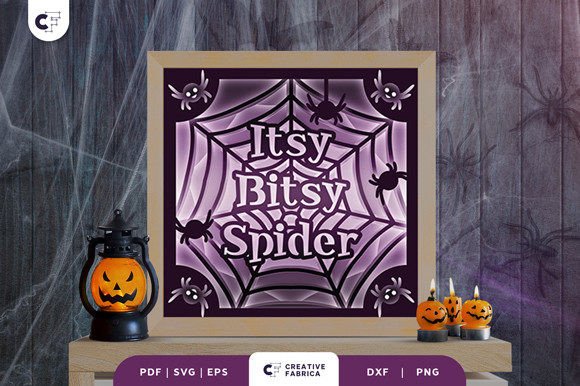
Itsy Bitsy Spider Web 3D SVG for Halloween Branding
As a brand designer who spends most of my week refining visual identities for local boutiques and artisanal food producers, I approach every new graphic design asset with a critical eye. It is not enough for an illustration to be cute; it must serve a strategic purpose within a broader brand identity. Recently, I evaluated the Itsy Bitsy Spider Web 3D Light Box file, specifically looking at its potential for small business branding during the autumn season. My initial impression was one of playful nostalgia mixed with a sophisticated depth that is often missing from flat clipart. The layered nature of this 3D SVG immediately suggests a tactile quality, making it an ideal candidate for businesses that want to convey a sense of handmade care and festive charm without sacrificing professional polish.
Evaluating Mood and Brand Personality Fit
The mood created by the Itsy Bitsy Spider Web 3D Light Box is distinctly whimsical yet structured. Unlike generic spooky graphics that can feel aggressive or overly dark, this design leans into the friendly side of Halloween. It evokes a feeling of childhood wonder, which makes it exceptionally well-suited for specific market sectors. I could easily see this working for a children's boutique, a family-owned bakery launching a seasonal cupcake line, or a handmade soap business creating a limited-edition "spider web" bath bomb. The aesthetic feels organic and decorative rather than industrial. For a local business owner, this asset suggests a brand personality that is approachable, creative, and community-focused. It lacks the coldness of corporate minimalism, instead offering a warm, inviting vibe that encourages customer engagement.
Strategic Applications in Packaging and Print
In terms of practical application, the versatility of this SVG design is impressive for packaging design. Because it is a vector-based file, it scales infinitely without losing resolution, which is crucial when moving from a tiny product label to a large storefront window decal. I envision using the layered elements to create depth on hang tags for a clothing boutique, where the spider web acts as a die-cut window revealing a patterned paper underneath. For food businesses, this graphic works beautifully as a seal on jar lids or as a focal point on box tops for cookie tins.
Beyond physical goods, the asset shines in marketing visuals. Social media managers can utilize the 3D effect to create engaging Instagram Stories or Pinterest pins that stand out in a crowded feed. The depth of the image adds a level of professionalism to social media graphics that flat images often lack. Furthermore, it serves as an excellent hero graphic for email newsletters announcing a fall sale or a seasonal product drop. When used on thank-you cards included in shipment boxes, it reinforces the unboxing experience, turning a simple transaction into a memorable brand interaction.
Enhancing Business Presentation and Trust
Integrating high-quality assets like the Itsy Bitsy Spider Web 3D Light Box directly impacts how customers perceive a brand. A stronger first impression is often the difference between a browser and a buyer. When a product mockup features crisp, well-designed seasonal elements, it signals to the consumer that the business pays attention to detail. This leads to better product recognition and improved customer trust. In a marketplace saturated with generic templates, using a unique, layered illustration helps establish a clearer visual hierarchy on packaging. It draws the eye to the brand name while providing context through the seasonal theme. Ultimately, this contributes to more polished professional branding that elevates a handmade business to look like an established enterprise.
Ideal Placement and Design Constraints
To maximize the impact of this asset, placement is key. It works best as a packaging accent, a decorative brand element on tote bags, or a central motif on promotional banners. It is particularly effective on seasonal packaging where the theme is expected and welcomed. However, there are scenarios where this graphic should be used with caution. For formal corporate branding or luxury minimalist brands that rely on stark whitespace, the playful nature of the spider might clash with the desired tone. Additionally, designers must be careful not to use it on very small labels where the intricate 3D layers might blur together, or in ingredient-heavy layouts where the decoration competes with important legal text. It should never obscure vital information on a product label or reduce legibility on low-contrast backgrounds.
Practical Notes for the Professional Designer
Before committing this asset to a client project, there are several technical checks I recommend. First, always test the design on real product mockups to ensure the 3D layers translate well to the specific material, whether it is kraft paper, glossy plastic, or fabric. Check how the design performs in black and white, as some printing methods for commercial design may not support full color. Preview the graphic on small labels to confirm that the finest details of the web remain distinct. It is also wise to test the illustration beside various typography styles; while it pairs naturally with handwritten or display fonts, seeing how it interacts with clean sans serif or traditional serif fonts can reveal unexpected harmonies.
Finally, always verify the commercial license associated with the file. Whether you are sourcing this from a creative marketplace or a specific designer's portfolio, ensuring you have the rights for commercial design and physical product sales is non-negotiable. Inspect the SVG editability to confirm you can recolor the layers to match specific brand palettes. By treating this Itsy Bitsy Spider Web 3D Light Box not just as a clipart image but as a strategic component of a larger brand identity, local business owners can create seasonal campaigns that are both visually stunning and commercially effective.